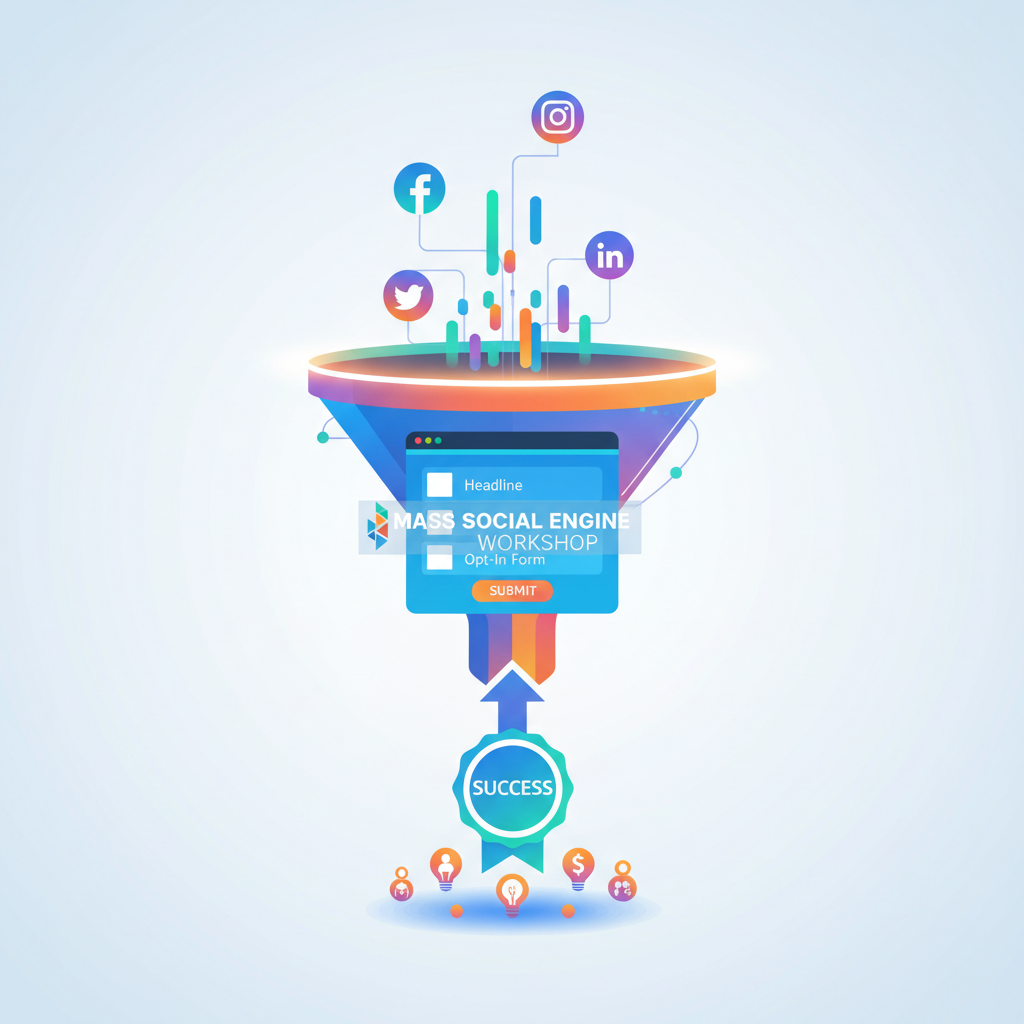
Imagine this: you're investing countless hours in crafting the perfect ad campaign, yet your conversion rates are stagnant. What if the solution was a single webpage? Knowing how to create high-converting landing pages for lead generation could be the game-changer you need. Whether you're new to digital marketing or a seasoned pro, the secret to capturing more leads lies in optimizing your landing pages. This post unpacks the techniques and strategies to transform your landing pages into lead-generating powerhouses.
Understanding High-Converting Landing Pages
A landing page is more than just a standalone webpage. It’s your first impression and a direct reflection of your brand’s value proposition. But what makes a landing page 'high-converting'? At its core, a high-converting landing page is focused, relevant, and persuasive. It leads users seamlessly towards a single action — filling out a form, downloading an ebook, or signing up for a webinar. Consider the example of Dropbox, whose minimalist landing pages with clear calls-to-action have significantly boosted their subscriber base. Their landing pages don't just inform; they compel action by being laser-focused on a singular outcome. The effectiveness of a landing page often boils down to clarity and simplicity. A clutter-free design keeps the user’s attention on the essential elements, such as the headline, benefits, and the call-to-action. When visitors aren't overwhelmed with choices or text, they can easily understand what’s expected and why they should proceed. To add to that, a seamless user experience ensures that technical glitches do not disrupt the conversion process. Each element should guide the user naturally towards the conversion goal, reinforcing the benefits and value proposition at every step.
Steps to Create High-Converting Landing Pages
Creating a high-converting landing page involves several critical steps. First, zero in on your target audience. Tailor your message, design, and offer to meet their specific needs and pain points. Conduct detailed market research to understand what drives your audience, what language resonates with them, and what problems they are eager to solve. Secondly, design with simplicity in mind. Use a clean layout, with a strong headline and supporting subheadline to grab attention immediately. The visual hierarchy should lead the visitor's eyes smoothly from the headline, through the benefits, and down to the call-to-action. Third, craft compelling copy. Your content should be engaging, concise, and persuasive, emphasizing benefits over features. Potential clients are more interested in how your offer can solve their problem than in the technical specifications. Finally, optimize your call-to-action (CTA). A clear, prominent CTA guides visitors towards the desired action. For instance, instead of a generic 'Submit' button, try 'Get My Free Guide'. The CTA should be visually distinct, using contrasting colors to stand out, and should be placed strategically above the fold for immediate visibility. Consider conducting usability tests to see how users interact with the page and the CTA. Is it easy to spot? Does it communicate urgency or value? These insights can guide iterative improvements, making your CTA even more effective.
Utilizing Tools and Techniques for Better Results
To enhance your landing page’s performance, leverage tools like A/B testing and heat maps. A/B testing allows you to experiment with different versions of your page to see what resonates best with your audience. For example, you can test variations of your headline, images, or CTA buttons to identify which combination yields the highest conversion. Heat maps provide insights into where users click, helping you identify which elements draw the most attention. These insights can be invaluable in optimizing the placement of key elements on your landing page. Combine these tools with analytics data to refine your landing pages continuously. Detailed metrics such as bounce rates, time on page, and conversion paths can offer deeper insights into user behavior. Consider using platforms like Unbounce or Leadpages, which offer templates designed specifically for high conversion rates. These tools simplify the process, enabling you to focus on strategy and content. They often come with built-in features for A/B testing and integrations with analytics tools, making it easier to track and improve performance. Moreover, these platforms provide drag-and-drop interfaces, so you don't need extensive coding skills to create professional-looking pages.
Common Mistakes to Avoid
Many marketers stumble by overloading their landing pages with information or distracting elements. Remember, less is more. Avoid cluttered designs and multiple CTAs that can confuse your audience. A single, focused CTA is much more effective than several competing ones. Additionally, ensure that your landing page is mobile-optimized as a significant portion of traffic now comes from mobile devices. In fact, Statistica reports that over 50% of web traffic globally now comes from mobile users. Neglecting mobile users is a surefire way to lose potential leads. Ensure that your page loads quickly and that all elements are easily clickable on a smaller screen. Another pitfall is using vague or overly complex jargon in your copy, which can alienate or confuse visitors. Aim for clarity and simplicity in both design and messaging. Test your copy with a diverse audience to ensure it’s understandable and engaging. Avoid assumptions about your audience's knowledge level. Clear, plain language always trumps industry jargon when it comes to engaging a broad audience.
Advanced Tips for High-Performance Landing Pages
Once you have the basics down, consider advanced strategies to further boost your landing page performance. Implement social proof, like testimonials or customer reviews, to build trust and credibility. According to Nielsen, 92% of consumers trust recommendations from people over brands. Including real reviews or testimonials can significantly enhance credibility and encourage conversions. Another approach is to use urgency and scarcity tactics. Phrases like 'Limited Time Offer' or 'Only a Few Spots Left' can motivate users to act quickly. Urgency creates a psychological trigger that prompts immediate action, effectively reducing hesitation. Additionally, integrate multimedia elements, such as videos, to engage users and convey your message more effectively. A well-produced video can communicate complex ideas in a short span, catering to those who prefer visual content over text. Finally, continually monitor and analyze the performance of your landing pages, making iterative improvements based on data and user feedback. Use tools like Google Analytics to track key performance indicators (KPIs) such as conversion rates, bounce rates, and user engagement metrics. Regularly update your content and design to keep your landing page fresh and relevant, ensuring that it continues to perform optimally over time.
Related: You might also find this useful: How to Create TikTok Content for Lead Generation Success
What makes a landing page high-converting?
A high-converting landing page is focused, with a clear message, simple design, compelling copy, and a strong call-to-action that guides visitors towards a single action. Successful landing pages also leverage social proof, urgency, and are continually optimized based on analytics and user feedback.
How can I optimize my landing page's call-to-action?
Use direct and specific language in your CTA. Make it stand out visually, and convey the immediate benefit of clicking. Test variations to see which performs best. Place your CTA strategically to ensure it's visible without requiring users to scroll, and experiment with different colors and text to find the most engaging option.
Why is A/B testing important for landing pages?
A/B testing is crucial because it allows you to compare different elements of your landing page, helping you identify what works best and optimize for higher conversion rates. It provides data-driven insights that can inform design decisions and highlight unexpected user preferences.
Should landing pages be mobile-optimized?
Yes, ensuring your landing page is mobile-optimized is vital, as many users access content on mobile devices. A mobile-friendly design increases usability and lead conversion rates. Pages should load quickly, with easy navigation and accessible forms, to prevent high bounce rates from mobile users.