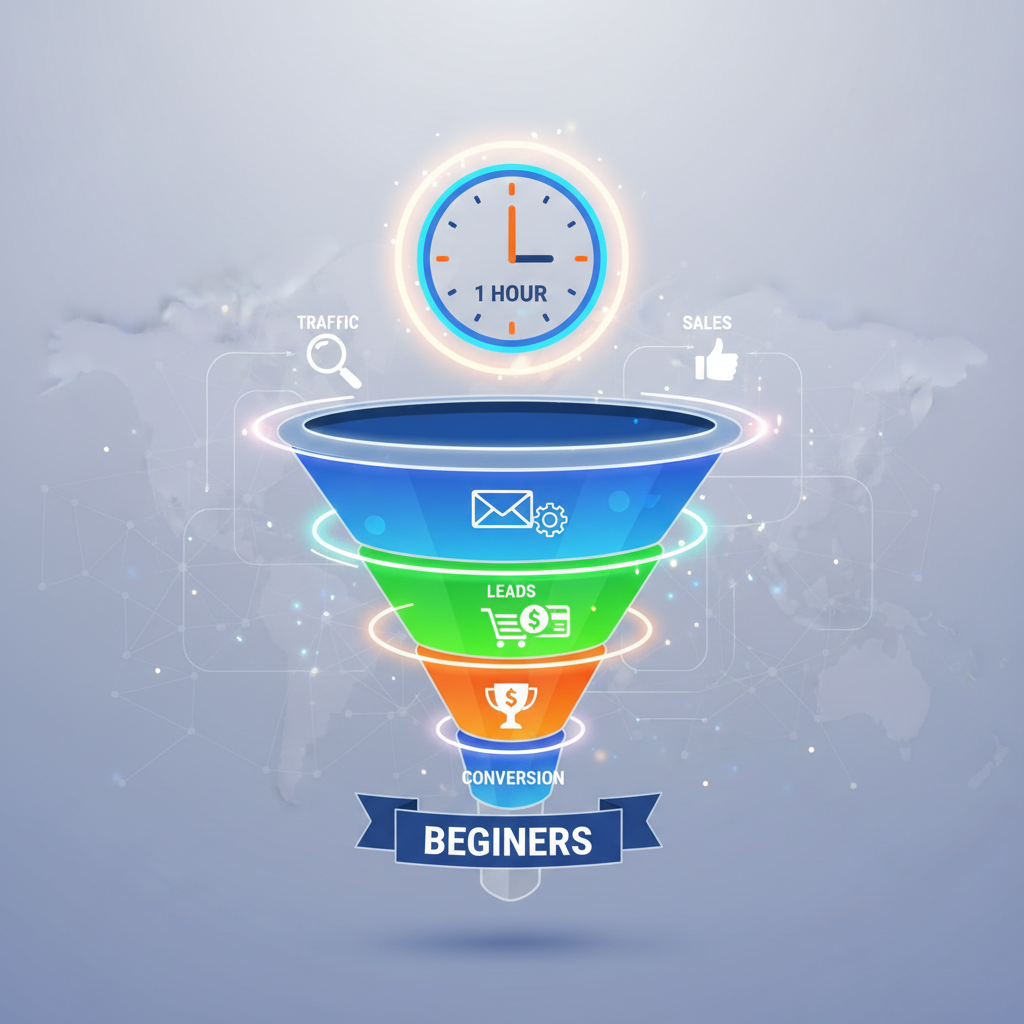
Imagine this: You’re a small business owner or a marketer eager to dip your toes into the world of digital marketing. You've heard that funnels are crucial for converting prospects into customers, but the thought of building one seems daunting, especially if you're a beginner. Fear not, because learning how to build a funnel for beginners in an hour is simpler than you might think. This guide will walk you through the process, breaking it down into manageable steps that anyone can follow, even if you’re just starting. Let's dive in and turn that overwhelming task into a manageable project.
Understanding the Basics: What is a Sales Funnel?
A sales funnel is essentially a roadmap guiding potential customers through the journey from awareness to decision-making. At its core, a funnel has three stages: Top of the Funnel (ToFu), Middle of the Funnel (MoFu), and Bottom of the Funnel (BoFu). Each stage serves a unique purpose, targeting different customer needs and behaviors.
For instance, at the ToFu stage, the goal is to attract and capture the attention of as many potential customers as possible. This is often achieved through content that educates or entertains, such as engaging YouTube videos, blog posts, or social media content. Imagine you own a fitness brand; your ToFu content might include a YouTube series on beginner workouts or a Facebook post about the benefits of a healthy lifestyle. This stage is not about selling but about generating interest and awareness.
As prospects move to the MoFu stage, they become more interested in learning about your specific offerings. Here, your content should focus on building credibility and trust. This might involve case studies, detailed blog posts, or product demonstrations. For our fitness brand example, this could be a blog post showcasing successful client transformations or an email series on how your products can enhance workouts.
Finally, at the BoFu stage, your goal is to convert prospects into paying customers. This is where targeted offers, such as discounts or limited-time promotions, come into play. It's the stage where you leverage everything you know about the prospect to nudge them towards making a purchase. For the fitness brand, this might involve a special offer on a membership plan or a one-on-one coaching session.
Sales funnels are crucial because they help you systematically convert interest into action, making them a fundamental component of digital marketing strategies. If this concept intrigues you, explore how to boost YouTube engagement using TikTok content to effectively capture the top of your funnel.
Step-by-Step Guide: How to Build a Funnel for Beginners in an Hour
Now that we’ve established what a funnel is, let’s dive into the creation process. Start by identifying your audience’s needs. What problems do they face that your product or service solves? Use this insight to craft a compelling lead magnet—something valuable you offer for free in exchange for a contact detail, like an email address. This could be a free eBook, a webinar, or a discount code.
Consider the lead magnet as the bait that attracts your target audience. For example, if you run an online course on digital marketing, a lead magnet could be a free guide titled "10 Secrets to Enhancing Your Digital Marketing Strategy." This guide should be packed with actionable insights that make the participant eager for more content from you.
Next, create a landing page dedicated to this offer. This page acts as the first impression of your funnel and should be simple yet persuasive, focusing on the benefits of your offering. The design should be clean, with a clear call-to-action (CTA) that encourages visitors to submit their contact information. Use compelling headlines, concise copy, and engaging visuals to highlight the value of the lead magnet.
Once they opt-in, guide your leads through the funnel with a crafted sequence of emails that nurture interest and build trust. These emails should gradually introduce your product's benefits while providing additional value, keeping your audience engaged. For instance, the first email could welcome them and deliver the lead magnet, while the second introduces a success story from someone who benefited from your product or service.
Each step from capturing an email to sending targeted content can be automated. For further efficiency, check out our quick start automation guide for small businesses. Automation saves time and ensures that no lead falls through the cracks, allowing you to focus on optimizing other parts of your business.
Tools and Platforms to Expedite Your Funnel Building
Building a funnel doesn't have to be an arduous task, especially with the multitude of tools available to streamline the process. Platforms like ClickFunnels, Leadpages, and Unbounce are popular choices among beginners due to their intuitive interfaces and robust functionality.
These tools offer pre-designed templates that cater to various industries, ensuring that your funnel follows best practices. For example, ClickFunnels provides a drag-and-drop editor that makes it easy to customize your funnel without needing technical skills. You can quickly modify templates to fit your branding and messaging needs, allowing you to launch your funnel swiftly.
Additionally, these platforms offer analytics to track your funnel's performance, allowing you to tweak and optimize for better results. Imagine running a funnel for an e-commerce store; you can use analytics to identify which products generate the most interest at each stage of the funnel, optimizing your strategy accordingly.
For those looking to maximize their revenue potential, consider exploring how to generate income from affiliate marketing videos, integrating this strategy into your funnel for diversified income streams. Combining affiliate marketing with your funnel strategy can enhance your revenue and provide additional value to your audience.
Common Mistakes to Avoid When Building Your First Funnel
As you embark on your funnel-building journey, it's important to be aware of common pitfalls. One major mistake is overcomplicating the funnel with too many steps, which can confuse potential customers and lead to drop-offs. Keep your funnel simple and focused to maintain engagement. A streamlined process ensures that prospects move smoothly from one stage to the next, enhancing the likelihood of conversion.
Another common error is neglecting to test your funnel. Testing is crucial to identify weak points, such as broken links or non-responsive pages. Ensure that every element of your funnel—from the landing page to the thank-you page—works seamlessly on all devices. Conduct A/B testing to compare different versions of your funnel elements, such as headlines or CTA buttons, to determine which performs better.
Lastly, avoid using generic messaging. Personalization is key to resonating with your audience and can significantly impact conversion rates. Use data collected from your prospects, such as their names and previous interactions, to tailor your messages and offers. Personalized communication creates a sense of connection and makes the recipient feel valued, increasing the likelihood of conversion.
By understanding these common mistakes, you can create a smoother, more effective funnel experience for your audience. Learning from mistakes allows you to refine your approach, ensuring that your funnel remains a powerful tool for driving sales and growing your business.
Advanced Tips for Scaling Your Funnel Strategy
Once you’ve mastered the basics of funnel building, scaling up can bring in more leads and conversions. One strategy is to implement A/B testing to continuously refine your funnel's elements, such as headlines, images, and call-to-action buttons. Analyze the performance data regularly to make informed decisions. Split testing allows you to discover what resonates best with your audience and optimize for maximum impact.
Additionally, consider integrating advanced marketing techniques such as retargeting ads to capture visitors who didn’t convert on their first visit. Retargeting can increase conversion opportunities by keeping your brand top-of-mind. For instance, if a visitor leaves your site without purchasing, a retargeting ad featuring a special offer could entice them to return and complete their purchase.
Explore other platforms like TikTok, where you can automate content for affiliate income, expanding your funnel's reach and effectiveness. TikTok offers a unique opportunity to engage with a younger audience, creating entertaining and informative content that directs users back to your funnel.
Finally, collaboration with influencers or affiliates can expand your audience reach and bring credibility to your offer. Partner with individuals who align with your brand values and have a substantial following in your target market. Influencers can introduce your products to their audience, generating interest and driving traffic to your funnel.
Related: You might also find this useful: How to Build a 3 Step Funnel in One Hour Flat
What is the first step in building a funnel?
The first step is identifying your target audience's needs and crafting a lead magnet that offers them value. This could be a free resource that addresses a pain point they have.
Which tools are best for beginners to build a funnel?
Tools like ClickFunnels, Leadpages, and Unbounce are great for beginners due to their user-friendly interfaces and comprehensive features that streamline funnel creation.
Why is testing my funnel important?
Testing is crucial to ensure all funnel elements work correctly and efficiently on all devices. It helps identify potential drop-off points and areas for improvement.
How can I scale my funnel once it's set up?
Scale your funnel by integrating A/B testing, retargeting ads, and collaborating with influencers or affiliates to extend your reach and optimize performance.