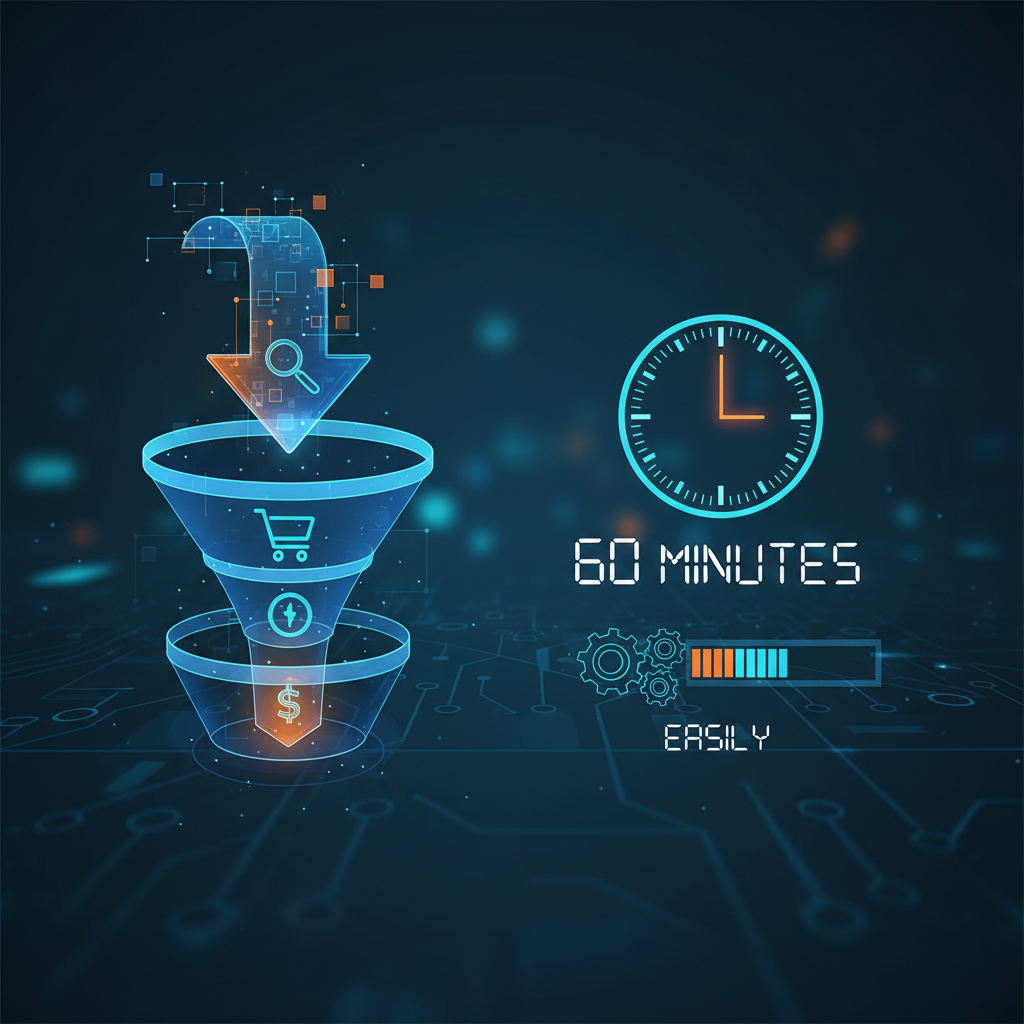
Imagine being able to construct a fully operational sales funnel in the same time it takes to watch an episode of your favorite show. This may seem like an ambitious goal, but learning how to build a sales funnel in 60 minutes is entirely feasible with the right strategies in place. Many entrepreneurs and marketers struggle with the complexities of funnel creation, often losing both time and money in the process. However, by simplifying the steps and focusing on the essentials, you can streamline this process and have your funnel up and running in record time.
Understanding the Core Elements of a Sales Funnel
A sales funnel is essentially a series of steps designed to guide visitors through the buying process. The core elements include awareness, consideration, decision, and action. Each stage plays a crucial role in converting prospects into customers. For instance, the awareness stage aims to attract potential customers, often through content marketing. The consideration stage involves nurturing leads, perhaps by offering valuable insights or free trials. Finally, the decision and action stages focus on closing the sale and encouraging repeat customers.
Consider a scenario where you're promoting an online course. Initially, you might attract potential students through engaging blog posts. As they move to the consideration stage, you could offer them a free mini-course. This nurtures the lead, building trust and establishing your authority. By the time they reach the decision stage, a well-timed discount or special offer can seal the deal.
Understanding these stages helps in crafting a more efficient funnel. For example, during the awareness phase, leveraging social media platforms like Instagram or Facebook can expose your brand to a broader audience. Tools like Facebook Pixel can track user interactions, allowing you to retarget ads effectively. In the consideration phase, webinars or live Q&A sessions can act as powerful tools to engage potential clients and answer their questions directly.
In the decision and action stages, testimonials and case studies play a vital role. People are more likely to trust a product or service if they see others have benefited from it. Consider adding video testimonials to your landing page as they are more engaging and convincing. Additionally, ensure that your checkout process is smooth and hassle-free. Implementing a one-click buying option can significantly enhance the user experience and reduce cart abandonment rates.
Step-by-Step Strategy to Build a Sales Funnel
Creating a sales funnel can be simplified into a few key steps. First, define your target audience. Knowing who your ideal customer is will direct every subsequent action, from content creation to ad targeting. To do this effectively, create detailed buyer personas that include demographics, pain points, and online behavior patterns. This helps in tailoring your message to resonate with your audience.
Next, create compelling lead magnets that speak to your audience's needs or pain points. This could be a free eBook, checklist, or webinar. An effective lead magnet should provide real value and solve a specific problem or answer a question that your audience has. For instance, if you are targeting small business owners, a guide on cost-effective marketing strategies would be highly appealing.
After capturing leads, focus on nurturing them. Use email marketing to maintain engagement and provide consistent value. Tools like Mailchimp or ConvertKit can automate this process effectively. Craft a sequence of emails that gradually builds trust and familiarity with your brand, leading your prospects towards making a purchase decision.
A critical step is to set up a landing page that clearly communicates your offer's benefits, supported by strong calls-to-action (CTAs). A good landing page should be visually appealing and easy to navigate. High-quality visuals and concise, persuasive copy are essential. Use A/B testing to determine which layout, headlines, and CTAs yield the best conversion rates.
The final step is to test your funnel. Use analytics to track performance and tweak elements as necessary for optimal results. Google Analytics, for instance, can provide insights into user behavior, showing where visitors drop off in your funnel. This data is invaluable for making informed adjustments to improve your conversion rates.
Additionally, consider employing heatmaps through tools like Hotjar to understand how users interact with your landing pages. This visual data can reveal unexpected user behavior or navigation issues that might not be obvious from analytics alone.
Leveraging Tools and Technology for Faster Funnel Creation
Technology can significantly expedite funnel creation. Platforms like ClickFunnels or Leadpages offer drag-and-drop functionalities that simplify design and deployment. These tools come with pre-designed templates that you can customize to fit your brand's style and messaging, saving you countless hours.
Consider using a Customer Relationship Management (CRM) system such as HubSpot to manage your leads efficiently. CRMs provide insights into customer behavior, enabling personalized communication and better conversion rates. Additionally, integrating Google Analytics helps monitor your funnel's performance, allowing you to make data-driven decisions quickly.
For instance, one marketer used ClickFunnels to construct a fully operational funnel in under an hour. By utilizing ready-made templates and automated email sequences, they were able to focus on refining their offer without getting bogged down by technical details.
Moreover, email automation tools like ActiveCampaign or MailerLite can automate follow-up sequences, ensuring that each lead receives the right message at the right time. These tools can also segment your audience based on their behavior, such as clicks or purchases, enabling more targeted marketing efforts.
Another powerful tool is Zapier, which allows you to connect different apps and automate workflows, saving you time and reducing errors. For example, you can set up a Zap that automatically adds new leads from your landing page to your CRM and email marketing tool, ensuring no lead slips through the cracks.
Common Mistakes in Funnel Building and How to Avoid Them
When building a sales funnel, several pitfalls can derail your efforts. A common mistake is overcomplicating the funnel structure. Many assume more steps mean better results, but this often leads to a confused audience. Keep your funnel straightforward and focused on leading the prospect to the next step seamlessly.
Another mistake is neglecting the mobile experience. In today's digital age, a significant portion of traffic comes from mobile devices. Ensure your funnel is mobile-optimized, from the landing page to the checkout process. Also, avoid the classic error of ignoring analytics. Without tracking, you can't identify what's working and what needs improvement.
Lastly, many neglect follow-up. Once a lead enters your funnel, consistent communication is key. Leverage automated email sequences to keep potential customers engaged and informed about your offerings. For more tips on improving engagement, check out this guide on using video content.
Additionally, don't forget to test your funnel regularly. Market trends and consumer behaviors change, and your funnel should adapt accordingly. Set a schedule for reviewing your funnel analytics and make iterative improvements. This proactive approach can significantly enhance your funnel's performance over time.
Finally, ensure that your messaging is clear and consistent. Mixed messages can confuse potential customers and dissuade them from converting. Your funnel should lead with a consistent value proposition, making it easy for prospects to understand what you offer and why they need it.
Advanced Tips for Scaling Your Sales Funnel
Once you've successfully built your funnel, scaling becomes the next challenge. Consider implementing split testing, or A/B testing, to refine and improve each step of your funnel. Test different headlines, CTAs, and offers to see what resonates best with your audience.
Additionally, explore upselling and cross-selling opportunities. Once a customer makes a purchase, offer complementary products or services. This can be seamlessly integrated into your funnel, increasing the average transaction value.
Automation tools can further enhance your funnel's efficiency. Use platforms like Zapier to automate tasks between apps, freeing up your time to focus on strategy. Check out our post on affiliate marketing growth hacks for more ideas on scaling revenue streams through your funnel.
Another approach to scaling is leveraging partnerships and collaborations. By aligning with other businesses that serve a similar audience, you can expand your reach and gain access to new customer segments. Joint webinars, co-branded content, and affiliate marketing are excellent strategies to explore.
Finally, consider investing in retargeting campaigns. These involve showing ads to people who have interacted with your funnel but haven't yet converted. Retargeting keeps your brand top-of-mind and can re-engage leads who are on the fence, nudging them further down the funnel towards a purchase decision.
Related: You might also find this useful: How to Quickly Build a Simple Sales Funnel in 60 Minutes
What is a sales funnel?
A sales funnel is a marketing model that visualizes the journey potential customers take from awareness to purchase. It involves stages such as awareness, consideration, decision, and action.
How long does it typically take to build a sales funnel?
Traditionally, building a sales funnel can take several days to weeks, depending on the complexity. However, with optimized strategies and tools, it can be done in as little as 60 minutes.
What tools can help in building a sales funnel quickly?
Tools like ClickFunnels, Leadpages, and Mailchimp can significantly expedite the process. They offer pre-built templates, automation, and analytics to streamline funnel creation and management.
How can I improve the conversion rate of my sales funnel?
Improving conversion involves constant testing and optimization. Use A/B testing for different funnel elements and ensure your messaging is clear and compelling. Regularly analyze performance metrics to make data-driven adjustments.