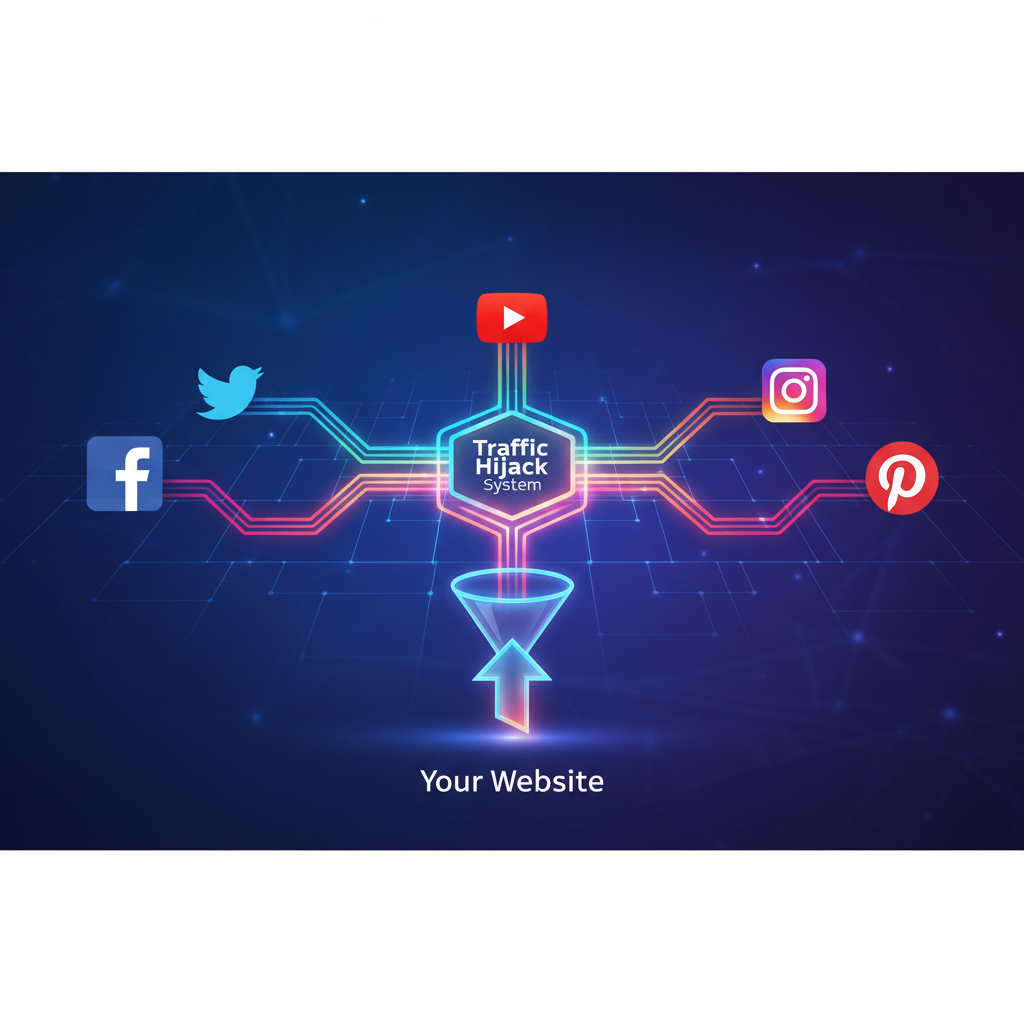
Have you ever wondered why despite having thousands of followers on social media, your website traffic remains stagnant? You’re not alone. Many online entrepreneurs face the same paradox. The real problem is figuring out how to hijack traffic from social media platforms directly to your site. With the right strategies, you can convert your social media engagement into valuable web traffic. Let's dive into effective methods to turn your social connections into website visitors.
Understanding the Concept: Social Media Traffic Hijacking
Social media traffic hijacking involves leveraging your presence on social platforms to direct users to your website. Think about how ads pop up on your social feed and lure you to a particular site. That’s a form of traffic hijacking. This technique matters because social media is where your potential audience spends a significant portion of their day. According to Statista, users worldwide spend an average of 145 minutes per day on social media as of 2023. This means there's an enormous opportunity to engage them and guide them to your website.
For instance, a lifestyle blogger who shares blog content on Instagram stories can guide followers to their website for more details. These platforms act as a bridge connecting social engagement to website visits. This method is crucial for anyone aiming to increase their online footprint without massive ad spend. By strategically placing links and using engaging content, you can effortlessly transition your audience from social media to more in-depth content on your website where you can nurture them further.
Building an Effective Social Media Content Strategy
Your first actionable strategy is crafting a robust social media content plan. Start by understanding your audience's interests and create content that resonates with them. According to Hootsuite, 90% of social media users have used social media to communicate with a brand or business. This means your content should not only be engaging but also conversational, encouraging dialogue and interaction.
Utilize engaging formats like polls, quizzes, and live sessions to boost interaction. For example, if you’re running a blog on affiliate marketing, sharing snippets on platforms like Instagram or Facebook with links to full articles can increase visibility. A company like BuzzFeed excels in using quizzes to drive engagement and traffic to their site. Regularly posting relevant content keeps your audience engaged and more likely to click through to your site. Ensure your posts have clear call-to-actions (CTAs) directing users to your website. A well-placed CTA such as 'Swipe up to read more' or 'Click the link in bio for full details' can significantly increase your click-through rates.
Leveraging Viral Trends for More Traffic
The second strategy involves leveraging viral trends to your advantage. Trends on social media are powerful because they capture the audience's current interest. Creating content around these trends can significantly boost your visibility. For instance, the ice bucket challenge was not only popular but also a great example of how a viral trend can bring about exponential reach and engagement. Brands that incorporated their message into the trend saw a massive uptick in engagement.
Use platforms like TikTok or Instagram Reels to tap into these trends. These platforms are particularly effective for short, engaging content that can quickly catch the eye of a broad audience. Producing content that aligns with trending topics can drive a larger audience to your website. Social listening tools, like Brandwatch or BuzzSumo, can help identify these trends early, giving you a strategic advantage in crafting timely content. For a deeper understanding on how to align with trends, check out our guide on leveraging viral trends for organic growth.
Common Pitfalls in Social Media Traffic Hijacking
While attempting to hijack traffic, many fall into the trap of overly promotional content, which can be off-putting. According to a study by Sprout Social, 57% of consumers are annoyed by too many promotions. Avoid constantly pushing your products or services without offering value. Instead, balance promotional content with educational or entertaining posts. Educational content showcases expertise, while entertaining content keeps your audience engaged and more receptive to your message.
Overposting is another pitfall; it can lead to audience fatigue, resulting in unfollows. Buffer suggests posting consistently but not excessively — around 1-2 times daily on platforms like Facebook and Instagram, and more frequently on Twitter. Also, neglecting to engage with your audience post-sharing is a mistake. Engagement is key to building trust and relationships, which are essential for converting followers into website visitors. Respond to comments, ask questions, and create discussions to foster a sense of community.
Advanced Tips for Scaling Your Traffic Efforts
To take your strategy to the next level, consider collaborations and partnerships. Partnering with influencers or brands sharing a similar audience can exponentially increase your reach. For example, a travel blogger collaborating with a hotel chain can introduce both parties to a wider audience, enriching their content and credibility.
Another advanced tip is using analytics tools to assess the effectiveness of your campaigns. Tools like Google Analytics and Facebook Insights provide essential data on what’s working and what’s not. For instance, by analyzing which social posts drive the most traffic, you can focus your efforts on creating similar content. Use this data to refine your strategies. Additionally, explore automated tools that aid in content scheduling and audience analysis, making your campaigns more efficient. Platforms like Hootsuite and Buffer can streamline your social media efforts, ensuring timely posts and comprehensive metric evaluations. For more insights, explore our post on automating blog content with AI tools.
Related: You might also find this useful: Master How to Hijack Traffic Using Email Marketing Effectively
Related: You might also find this useful: How to Hijack Traffic from Expired Domains Effectively
Related: You might also find this useful: How to Hijack Traffic from Pinterest Effectively
Related: You might also find this useful: How to Hijack Traffic from Niche Forums Effectively
Related: You might also find this useful: How to Hijack Traffic Using Reddit Effectively
Related: You might also find this useful: How to Hijack Traffic from Podcast Audiences Effectively
Related: You might also find this useful: How to Hijack Traffic from Instagram Effectively: Proven Strategies
Related: You might also find this useful: Learn How to Hijack Traffic from Online Communities Effectively
Related: You might also find this useful: Master How to Hijack Traffic with Quora Effectively
What is the best social media platform for driving traffic?
The best platform varies based on your audience. Instagram, Facebook, and Twitter are popular for B2C businesses, while LinkedIn is effective for B2B. Analyze where your audience is most active. Conduct surveys or utilize analytics to determine your most engaged platform.
How often should I post on social media?
Consistency is key. However, quality trumps quantity. Posting once a day on platforms like Instagram or Facebook, and more frequently on Twitter, can yield the best results without overwhelming your audience. Remember, each post should provide value, so focus on quality interactions over quantity.
Can I use paid promotions to increase traffic?
Yes, paid promotions can be effective, particularly when targeting specific demographics. However, ensure your ad content is engaging and offers real value to prevent ad fatigue. Facebook Ads, for instance, allows you to target specific interests, behaviors, and demographics, ensuring your content reaches the right people.
How do I measure the success of my traffic hijacking efforts?
Use analytics tools to track metrics like click-through rates (CTR), engagement rates, and conversion rates. Regularly review these metrics to adjust your strategy and maximize your ROI. Set up goals in Google Analytics to track specific user interactions and assess the effectiveness of your social traffic strategies.