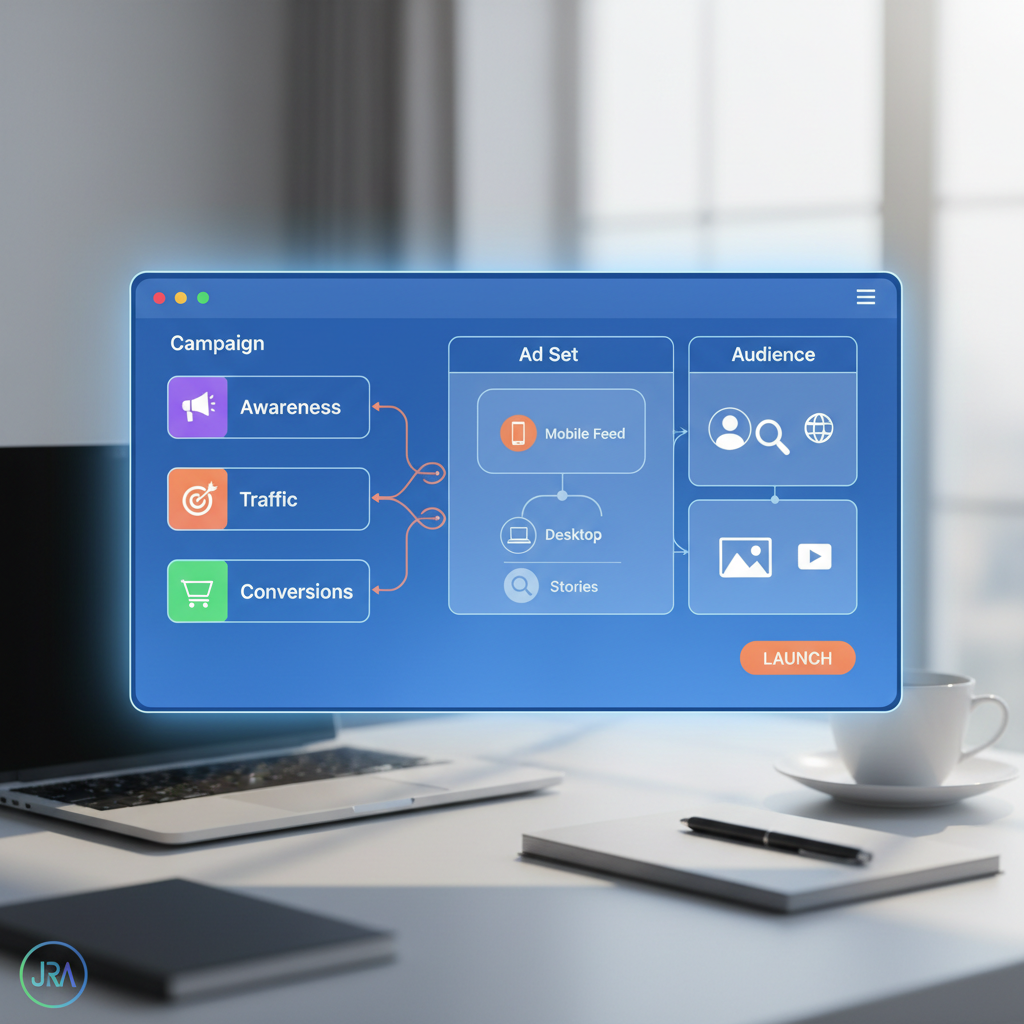
In the fast-paced world of digital marketing, knowing how to organise Facebook ad campaigns for beginners can make or break your strategy. Imagine launching a campaign and seeing no results. Frustrating, right? The truth is, many new advertisers struggle with structuring their campaigns effectively, which leads to wasted budgets and poor performance. Let's dive into how you can avoid these pitfalls and set up your campaigns for success from day one.
Understanding the Basics of Facebook Ad Campaign Structure
To organise Facebook ad campaigns effectively, it's crucial to first understand the basic structure. Facebook ads are organised into three levels: campaigns, ad sets, and ads. Each level serves a specific function. The campaign level is where you set your objective, such as traffic, conversions, or brand awareness. Choosing the right objective is essential as it determines how Facebook will optimise your ad delivery.
Consider this: A local bakery wants to increase its online orders. By setting 'Conversions' as their objective, Facebook will target users who are more likely to complete an order online. The ad set level allows you to define your audience, budget, and schedule. This is where you target specific demographics, interests, and locations. Finally, the ad level is where you design your creative - the images or videos and ad copy.
Getting these basics right is paramount. It's like building a house; without a solid foundation, nothing else will stand firm. If you want a more in-depth guide on crafting compelling video content for your ads, check out How to Create Irresistible Video Content for Sales Success.
Setting Up Your First Facebook Ad Campaign: A Step-by-Step Guide
Now that you understand the structure, let’s move on to setting up your first campaign. Start by choosing the right campaign objective. If you're focused on getting more website visits, select the 'Traffic' objective. Once your objective is set, it’s time to define your audience. Use Facebook’s targeting options to hone in on your ideal customers. Remember, targeting too broad an audience can dilute the effectiveness of your campaign.
Next, set your budget and schedule. As a beginner, it’s wise to start small—perhaps $5 to $10 per day. This allows you to test and learn without risking too much upfront. After you’ve set up the ad set, you’ll design your ads. Choose compelling images or videos and write persuasive ad copy. Be sure to align your visuals with your brand to maintain consistency across all marketing channels.
Once your ads are ready, review everything to ensure there are no errors. Hit 'Publish' and monitor your campaign results. Keeping a close eye on metrics like CTR (Click-Through Rate) and CPC (Cost Per Click) will help you understand how well your ads are performing.
Optimising Your Ads with Creative Testing and Audience Insights
Creating an ad is just the beginning. To maximise performance, you need to continuously test and optimise. Start with A/B testing different creatives. This involves running two versions of an ad with one varying element at a time, such as the image or headline. Over time, this helps determine what resonates most with your audience.
Let’s say you’re advertising a new online course. Test different headlines like “Learn Marketing Basics” versus “Master Marketing in 30 Days” to see which gets more engagement. Additionally, use Facebook Audience Insights to learn more about your audience’s interests and behaviours. This data is invaluable in refining your targeting and ad content.
Remember, testing is an ongoing process. Just like optimizing videos for better reach discussed in How to Create Viral YouTube Shorts from Long Videos, your ads should evolve based on performance data to keep improving results.
Common Mistakes in Organising Facebook Ad Campaigns
While setting up campaigns, beginners often make common mistakes that can hinder results. One major pitfall is failing to set clear objectives. Without a defined goal, it’s challenging to measure success or make necessary adjustments. Another mistake is ignoring audience segmentation. Trying to target everyone is like casting a wide net with big holes; you'll miss catching the fish you want.
Additionally, many beginners neglect the power of retargeting. Retargeting allows you to re-engage users who have interacted with your ads or website, increasing conversion chances. Avoid using only static images in your ads. Incorporate videos or gifs, which tend to capture attention more effectively.
Avoid these missteps, and you'll be on your way to running efficient campaigns. For more insights on attracting the right audience, check out Effective Strategies to Attract 1000 Buyer-Ready Followers Quickly.
Scaling Your Facebook Ad Campaigns Beyond the Basics
Once your campaigns are running smoothly, it’s time to think about scaling. Scaling involves increasing your budget or expanding your audience while maintaining or improving results. One advanced strategy is to duplicate successful ad sets and adjust the audience size or budget incrementally. Instead of a massive budget increase, try 10-20% at a time to avoid overwhelming Facebook's algorithm.
Another approach is to diversify your ad formats. Experiment with carousel ads or video ads to reach different segments of your audience. Use lookalike audiences to find new potential customers who share similarities with your existing audience. This can be a powerful way to expand your reach efficiently.
Finally, keep an eye on the frequency metric. If people see your ads too often, they may become fatigued, leading to lower engagement. Regularly refresh your ad creatives to keep your campaigns fresh and appealing.
Related: You might also find this useful: Master How to Manage Facebook Ad Campaigns for Beginners
What is the best budget to start a Facebook ad campaign?
For beginners, starting with a small daily budget of $5 to $10 is advisable. This allows you to test the waters without risking too much, and you can gradually increase your budget based on performance.
How important is ad creative in a Facebook ad campaign?
Ad creative is crucial as it is the first thing users see. Compelling images or videos and engaging copy can significantly impact your ad's success by capturing attention and encouraging action.
Can I change my campaign objective once it is live?
Once a campaign is live, you cannot change the objective. If you need a different objective, you'll have to create a new campaign. Ensure the correct objective aligns with your goals from the start.
What role do lookalike audiences play in scaling campaigns?
Lookalike audiences allow you to reach new users similar to your existing customers, making it an effective way to scale campaigns. They help expand your reach while maintaining high relevance and engagement.