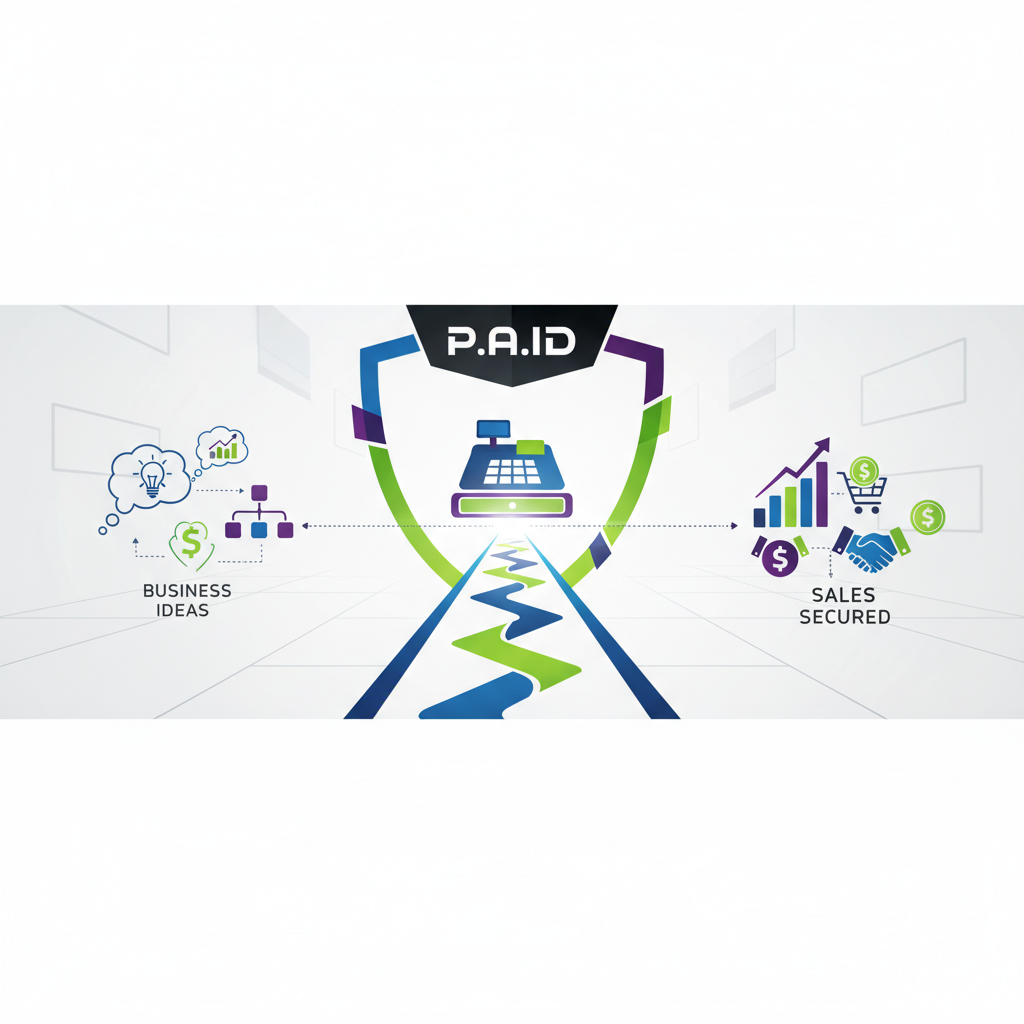
Imagine spending months developing a product only to hear crickets at launch. It's a nightmare scenario for entrepreneurs. To avoid this, learning how to validate business ideas and secure sales beforehand is crucial. This strategy ensures your time, money, and energy are invested in ventures that customers are actually eager to buy. In this guide, we'll explore a systematic approach that not only validates your idea but also secures sales swiftly, ensuring your business takes off successfully.
Understanding the Importance of Business Idea Validation
At the heart of any successful business lies an idea that resonates with a real audience. Business idea validation isn't just an initial step; it's the cornerstone of entrepreneurial success. By validating your idea, you confirm that there is a demand for what you're offering, reducing the risk of failure. Consider the story of Dropbox: before writing a single line of code, they created a video demonstrating their concept. This simple act helped validate demand, leading to early user engagement and eventual growth. Without validation, you risk developing a product nobody wants, draining resources without reward.
Furthermore, validation is about more than just confirming demand; it’s about gaining insights into your target audience. For example, through the validation process, you may uncover nuances about your audience's preferences or pain points that can significantly influence product development. This iterative feedback loop was famously exemplified by Airbnb. Initially struggling to gain traction, Airbnb discovered that professionally shot photos of listings attracted more bookings. This insight, derived from user feedback and data analysis, was pivotal in refining their service offering and achieving massive growth.
Effective Strategies to Validate Business Ideas
Start by leveraging surveys and interviews to gauge interest. These tools allow you to collect direct feedback from potential customers. Create a simple survey using platforms like SurveyMonkey or Google Forms, focusing on understanding the pain points your idea addresses. Incorporate open-ended questions to gather qualitative data. Then, analyze this data to identify patterns and insights.
Surveys should be designed meticulously to avoid bias. For example, instead of asking, "Would you be interested in a product that does X?", you might ask, "What challenges do you face with your current solutions for X?" This phrasing encourages honest feedback without leading respondents. Additionally, conducting interviews, whether in-person or virtually, allows for deeper insights as you can ask follow-up questions and observe non-verbal cues.
Another method is to run a mini-campaign via email marketing. Design a landing page that outlines your product idea and encourages sign-ups for more information. Use A/B testing to experiment with different messaging. This approach not only provides validation but also begins building a list of interested prospects, setting the stage for future sales.
Think of your landing page as more than just a digital flyer. It’s a dynamic tool to test your value proposition and messaging. By utilizing A/B testing, you can discern which headlines, calls-to-action, or graphics resonate best with your audience. This data-driven approach was successfully used by Buffer, a social media management tool, which started by sharing a simple landing page that gauged interest in their concept before a full product build.
Utilizing AI Tools for Refined Idea Generation
Today's digital landscape offers powerful AI tools that can significantly enhance your idea generation process. Tools like ChatGPT can help brainstorm innovative concepts by suggesting variations and improvements based on initial inputs. This can be particularly useful when you're stuck in a creative rut. AI can analyze market trends and consumer behavior, providing you with insights that were previously difficult to obtain.
AI isn't just a tool for brainstorming. It can offer analytical capabilities that transform raw data into actionable insights. By using AI tools to conduct market analysis, you can uncover emerging trends or shifts in consumer preferences, which can be vital for validating and refining business ideas. For instance, AI algorithms can track consumer sentiment across social media platforms, offering real-time insights into the viability of a business concept.
Consider using AI to optimize your email outreach. Crafting compelling emails that achieve high open rates is critical. By analyzing past email campaigns, AI can suggest optimal times to send emails and the most engaging subject lines, significantly boosting your validation campaign's effectiveness. For more tips on optimizing your digital marketing efforts, check out our post on social media marketing automation.
Avoiding Common Pitfalls in Idea Validation
One of the most common mistakes is relying too heavily on friends and family for feedback. Their opinions are often biased and don't accurately represent your target market. Instead, reach out to unbiased individuals who fit your customer persona. Another pitfall is failing to act on feedback. Validation isn't just about collecting data; it's about using that data to refine and improve your concept.
To ensure you’re not swayed by biased feedback, leverage platforms like Reddit or niche forums where your target audience congregates. Engaging with these communities not only provides unbiased insights but also helps build a rapport with potential customers. For example, the founders of the card game Exploding Kittens initially tested their game concept on Reddit, receiving invaluable insights and building a community that propelled their Kickstarter success.
Don't fall into the trap of over-researching without taking action. While research is crucial, prolonged analysis can lead to paralysis. Set a timeline for your validation phase and stick to it. For guidance on creating compelling content quickly, you might find our guide on automating thumbnail creation useful.
Establishing a timeline helps maintain momentum and prevents endless cycles of analysis. The Lean Startup methodology promotes the concept of "build-measure-learn" loops that emphasize rapid testing and iteration. Adopting this approach ensures you are constantly moving forward, learning, and adapting in real-time rather than stagnating in over-analysis.
Advanced Tips for Securing Sales Post-Validation
Once you've validated your idea, the next step is securing those crucial initial sales. Create a basic sales funnel using platforms like ClickFunnels or Leadpages. These tools help automate the process of capturing leads and converting them into paying customers. Implementing a simple payment system using PayPal or Stripe is essential to start accepting payments quickly.
The power of a well-designed sales funnel cannot be overstated. Breaking down the customer journey into stages — awareness, interest, decision, and action — allows you to strategically guide prospects towards purchase. Each stage requires specific content and engagement tactics, such as educational webinars during the interest phase or limited-time offers at the action phase, to move prospects along the funnel.
Additionally, consider crafting a pre-launch campaign to build anticipation. Offer early-bird pricing or limited-time discounts to motivate immediate purchases. This strategy not only boosts initial sales but also helps establish customer loyalty. Furthermore, to scale your efforts, explore avenues like content syndication, as detailed in our post on website traffic growth through content syndication.
Pre-launch campaigns are about building excitement and a sense of urgency. Tesla, for example, generated massive buzz for their Model 3 by taking pre-orders long before the car was available. This approach not only validated demand but also provided Tesla with upfront capital and a committed customer base.
Related: You might also find this useful: How to Validate Business Ideas with Email Quickly
Related: You might also find this useful: How to Validate a Business Idea and Secure Sales Rapidly
Related: You might also find this useful: How to Validate Business Ideas and Make Sales Quickly
Related: You might also find this useful: Validate Business Ideas with Sales System Setup Easily
Related: You might also find this useful: How to Validate Business Ideas with Sales Before Launch
Related: You might also find this useful: Validate Business Ideas and Secure Sales with Email Strategies
Related: You might also find this useful: Validate Business Ideas and Secure First Sales in 30 Days
How can I ensure my business idea is unique?
Research the market thoroughly to identify gaps. Use tools like Google Trends and social media platforms to see what’s trending and how your idea fits in. Unique doesn't always mean new; it can also mean better or more efficient.
To truly stand out, analyze existing solutions and identify their weaknesses. This might involve reading customer reviews on competitor products to uncover common complaints or areas of dissatisfaction. Innovating based on these insights can lead to a superior or differentiated offering that captures market interest.
What if my idea fails during validation?
If your idea fails, don't be discouraged. Use the feedback to pivot or enhance your concept. Every failed idea brings valuable insights, helping you refine your approach and better understand your audience.
Consider the failures as stepping stones. The founders of Instagram initially built a location-based check-in app called Burbn, which failed. Feedback revealed users loved the photo-sharing feature, leading them to pivot to the Instagram we know today.
How quickly can I start generating sales after validation?
With a streamlined process, you can start generating sales within 24 to 48 hours after validation. Ensure you have a payment system in place and a clear offer to attract early adopters quickly.
Speed to market is critical. Utilize e-commerce platforms like Shopify that provide all-in-one solutions for setting up online stores, processing payments, and managing inventory, enabling rapid transition from idea validation to actual sales.
Is email marketing effective for all types of businesses?
Email marketing is versatile and can be effective for most businesses. The key is crafting personalized, relevant messages that engage your audience. Refer to our email signature best practices for creating a professional and engaging communication style.
Email remains a powerful tool for direct engagement and nurturing leads. For instance, personalizing email content by segmenting your list based on user behavior or preferences can increase engagement rates significantly.