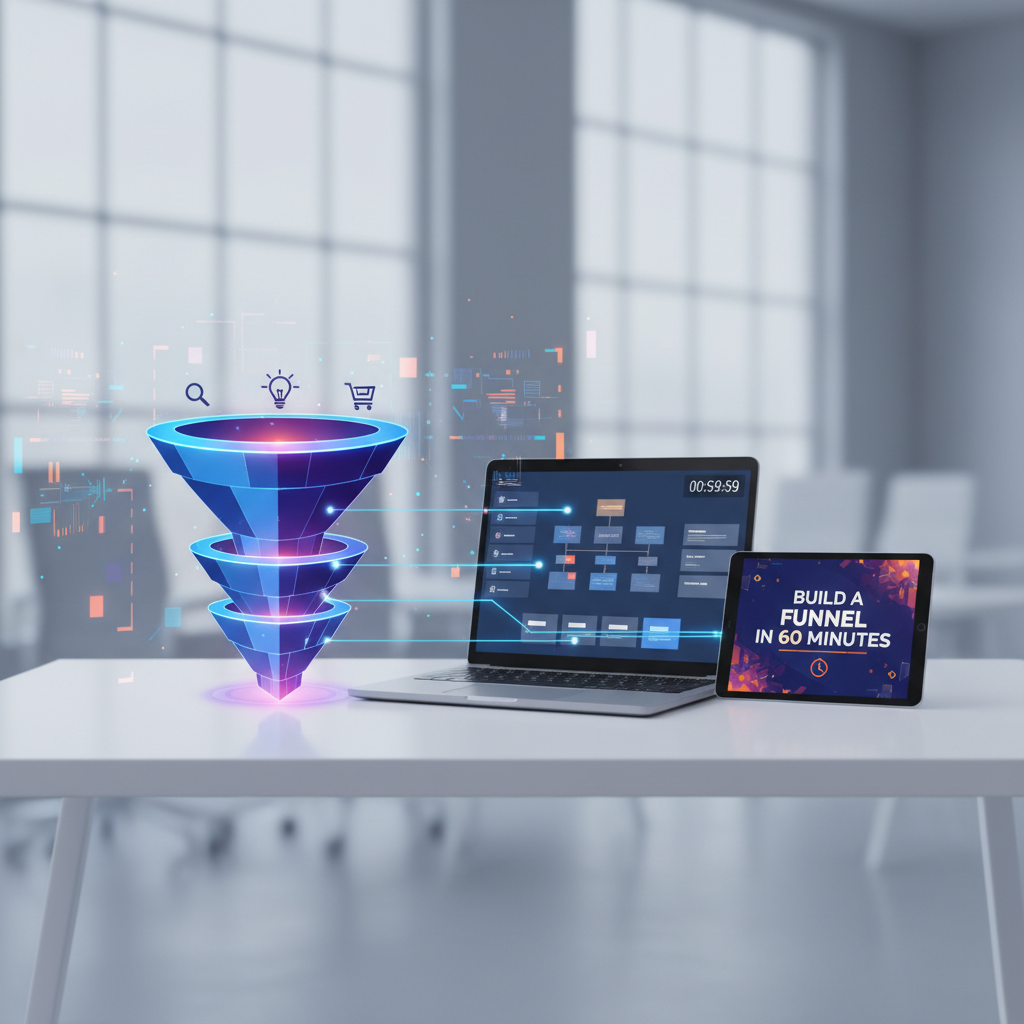
Are you tired of spending hours trying to figure out how to create a sales funnel that actually converts? Learn to build a 3 step funnel in 60 minutes with our straightforward guide, designed for those who need results fast. Whether you're a seasoned marketer feeling bogged down by complexity, or a beginner hoping to make your mark, this approach cuts through the noise. Let's transform how you see sales funnels and get you on the path to success.
Understanding the Basics of a 3 Step Funnel
The concept of a 3 step funnel is straightforward, yet many overlook its power due to its simplicity. At its core, this funnel consists of three primary stages: Awareness, Consideration, and Conversion. Each stage serves a unique purpose, guiding potential customers through your sales process smoothly. Imagine a customer browsing your website, intrigued by a well-placed ad, and finally making a purchase after receiving personalized content. This is the magic of a 3 step funnel in action. The beauty lies in its simplicity; by focusing on these critical stages, you eliminate unnecessary clutter and keep your strategy laser-focused. With the right guidance, you can implement this strategy in record time, drastically improving your conversion rates and overall marketing efficiency.
The first stage, Awareness, is all about capturing the attention of potential customers. This can be achieved through various means such as social media, search engine optimization, or paid advertisements. The goal is to introduce your brand or product to a new audience. Take, for example, using Facebook ads with targeted demographics to attract users who are most likely to be interested in your offerings.
Next, the Consideration stage engages those who have shown interest. This phase involves nurturing leads through informative content, such as blogs, videos, or webinars, that highlight the benefits and unique selling points of your product or service. For instance, if you're selling a software product, a webinar showing its capabilities and real-world applications can be very effective.
Finally, the Conversion stage is where the magic happens. This is when a potential customer decides to make a purchase. Here, techniques such as offering limited-time discounts, free trials, or personalized follow-up emails can tip the scales in your favor. Understanding these stages in detail empowers you to create a well-oiled machine that not only attracts but also converts traffic into loyal customers.
How to Implement Your Funnel in Just 60 Minutes
Now that you understand the core concept, let's dive into how to implement it quickly and effectively. First, define your target audience. Knowing who you're speaking to ensures your funnel resonates with the right people. Start by creating detailed buyer personas. These personas should include demographics, interests, pain points, and buying behaviors. The more detailed your personas, the better you can tailor your content to meet their needs.
Next, use tools like ClickFunnels or Leadpages to set up your funnel structure. These platforms offer drag-and-drop functionalities, allowing you to craft professional-looking pages without a steep learning curve. For instance, if you're setting up a landing page for an eBook, you can use templates that are specifically designed for lead generation, complete with compelling calls-to-action and strategically placed opt-in forms.
Once your pages are set up, integrate your email marketing system to capture leads and nurture them through automated sequences. Use an autoresponder like Mailchimp or ConvertKit to send personalized emails to every lead that enters your funnel. This is where you can apply strategies from our guide on budgeting Facebook ads effectively, ensuring your traffic sources fuel the funnel efficiently.
Finally, it's critical to test and tweak each stage to ensure optimal performance. Use A/B testing to try different versions of your landing pages and emails. Pay attention to metrics like open rates, click-through rates, and conversion rates to identify what's working and what needs adjustment. Making data-driven decisions will ensure that your funnel is always performing at its best.
The Tools and Techniques to Optimize Your Funnel
Having built your funnel, optimization is essential to maximize its potential. Start by analyzing the performance of each stage using analytics tools like Google Analytics and Hotjar. These platforms provide insights into user behavior, enabling you to identify drop-off points and improve user experience. For instance, if you notice a high bounce rate on your landing page, it might be time to reconsider the page's design or messaging.
A/B testing is your friend here; by testing different headlines, calls-to-action, and design elements, you can discover what truly resonates with your audience. Let's say you find that a particular headline increases engagement by 20%. That's a simple tweak that can have a significant impact on your conversion rates.
For more in-depth strategies, explore our resource on building a $10k affiliate marketing strategy, which provides valuable insights into scaling your results. Additionally, consider integrating social proof elements such as testimonials and case studies to build trust and credibility. When potential customers see others have succeeded with your product or service, they're more likely to follow suit.
Moreover, retargeting campaigns can bring back visitors who didn't convert the first time. These campaigns serve ads to users who've previously visited your site, keeping your brand top-of-mind. Retargeting can be particularly effective if paired with special offers like discounts or free shipping.
Avoiding Common Pitfalls in Funnel Creation
Even with the best intentions, it's easy to fall into common traps when building a funnel. One major mistake is overcomplicating your funnel with too many steps, which can overwhelm prospects and lead to high abandonment rates. Keep it simple and focused to maintain customer interest and streamline their journey from awareness to conversion.
Another pitfall is neglecting mobile optimization. With more than half of all web traffic coming from mobile devices, ensuring a seamless mobile experience is crucial. A poorly optimized mobile site can turn potential customers away faster than you can say "lost opportunity." Make sure your funnel pages are responsive and load quickly on all devices.
Lastly, don't underestimate the power of follow-up. If a lead doesn't convert immediately, it doesn't mean they're a lost cause. Implementing effective follow-up sequences can significantly increase your chances of conversion. Use automated email sequences to gently nudge unconverted leads, offering value with each communication, whether it's a helpful blog post, an exclusive offer, or a reminder of the benefits they could be enjoying.
Advanced Tips for Scaling Your Funnel Success
Once your funnel is up and running, it's time to think about scaling. Start by increasing your traffic sources. Utilize paid advertising strategies like Google Ads or Facebook Ads to drive targeted traffic to your funnel. For inspiration, see how automating YouTube video optimization can enhance your reach and attract a wider audience.
Another advanced tactic is segmentation. By segmenting your audience based on behavior, you can tailor your messaging for maximum impact, increasing engagement and conversion rates. For example, you might create separate email campaigns for leads who have shown interest in different products, allowing you to speak directly to their specific needs and interests.
Lastly, continuously monitor your funnel's performance, using tools like CRM systems to track metrics and make informed decisions about future strategies. Regular audits of your funnel's performance will reveal trends and areas for improvement, ensuring that your efforts are always aligned with your business goals.
What is a 3 step funnel?
A 3 step funnel is a streamlined sales process that involves three key stages: Awareness, Consideration, and Conversion. It's designed to guide prospects through the sales journey efficiently and effectively.
How can I learn to build a 3 step funnel in 60 minutes?
By following structured training like our 'Build A Funnel In 60 Minutes' course, you gain step-by-step insights into creating and optimizing a funnel quickly, using tools designed for simplicity and efficiency.
Why is a simple funnel more effective?
A simple funnel reduces complexity, making it easier for prospects to navigate and for you to manage. It focuses on critical conversion points, improving the likelihood of turning leads into customers.
What tools are recommended for building funnels?
Popular tools for building funnels include ClickFunnels, Leadpages, and Unbounce. These platforms offer user-friendly interfaces and powerful features to help you create professional funnels without technical expertise.