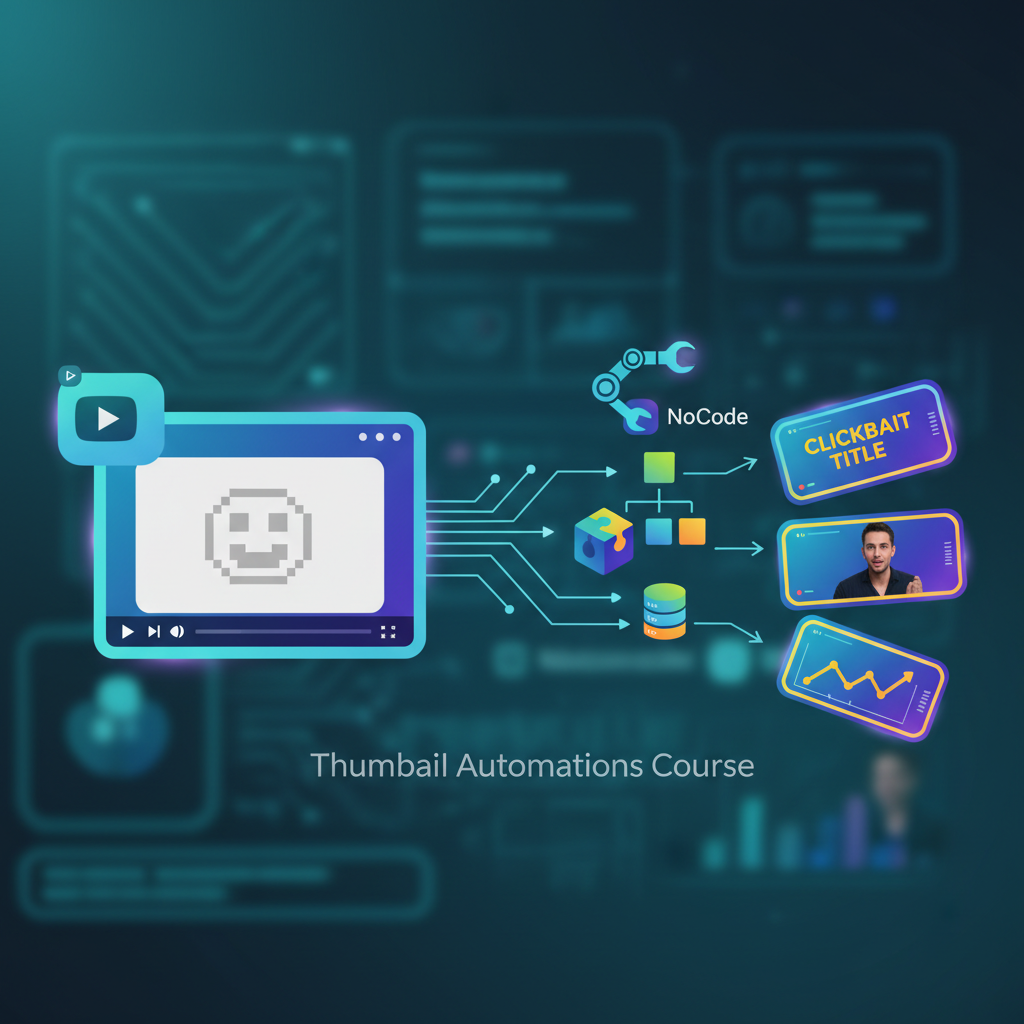
Imagine spending hours meticulously crafting thumbnail designs for each of your YouTube videos, only to find that your time could have been better spent elsewhere. For many content creators, this is a frustrating reality. But what if you could automate YouTube thumbnail design with NoCode tools, liberating you from the repetitive drudgery and allowing you to focus on what truly matters—creating compelling content? Within the first few lessons of the Thumbnail Automations course, you'll discover the transformative power of automation, leveraging NoCode tools to streamline your workflow and elevate your channel's visual appeal.
The Power of NoCode: Revolutionizing Thumbnail Design
NoCode tools have gained significant traction in the digital world, offering solutions that empower users to automate processes without any coding skills. This approach not only saves time but also reduces the complexity associated with traditional programming. For a YouTube creator, this means you can automate YouTube thumbnail design with NoCode tools, ensuring your video marketing efforts are visually consistent and professionally executed.
Platforms like Zapier or Integromat serve as the backbone of this automation, allowing you to connect various apps and automate repetitive tasks seamlessly. Imagine publishing a new video and instantly having a customized thumbnail ready to upload—no extra effort required. With these tools, you can create workflows that trigger thumbnail updates automatically, reducing the manual burden on your time and allowing you to focus on content creation.
The power of NoCode lies in its accessibility. You don’t need to be a tech guru to use these platforms. They are designed with user-friendly interfaces that guide you through creating automations step-by-step. For instance, you can set Zapier to monitor your YouTube channel for new uploads and trigger a series of actions: generating a thumbnail, customizing it to your liking, and uploading it back to YouTube. The result is a streamlined process that maintains the quality of your content without the manual repetition.
Step-by-Step: Automating Thumbnail Design
Embarking on this automation journey begins with selecting the right NoCode tools. Start by identifying a platform that integrates seamlessly with YouTube, such as Google Sheets or Canva, which can be automated using tools like Zapier. This is where your creative vision meets efficiency.
First, create a template in Canva that captures the essence of your brand. This template acts as a foundation for all your thumbnails, ensuring consistency and recognizability. With Canva’s extensive library of design elements, you can customize your template to match your brand's aesthetic. Consider using bold fonts and vibrant colors that catch the viewer’s eye, drawing them into your content. Once your template is ready, save it as a reusable file.
Next, set up automation rules in Zapier. When a new video is uploaded to your YouTube channel, data flows from YouTube to Google Sheets. This action triggers the creation of a thumbnail in Canva based on your template. You can even set parameters that personalize each thumbnail based on the video title or theme. This automated workflow ensures that each thumbnail is not only consistent but also relevant to the content it represents.
Finally, automate the upload of your thumbnails back to YouTube. Zapier can facilitate this by connecting directly to your YouTube account, ensuring that the right thumbnail is attached to each video without manual intervention. This not only saves time but also reduces the opportunity for error, allowing your creative process to flow without interruption.
Leveraging Tools and Techniques for Enhanced Engagement
Beyond the automation process itself, it's crucial to refine your thumbnail design to maximize viewer engagement. Tools like Canva offer a plethora of design elements and templates optimized for YouTube, allowing you to experiment with color schemes, typography, and imagery that resonate with your audience.
Design is not just about aesthetics; it's also about psychology. High-performing thumbnails often leverage principles of human attention. For example, using a clear, legible font in a bold color can capture attention quickly. Including a face in your thumbnail can also increase engagement, as people are naturally drawn to human expressions. These elements work together to create a visual story that entices viewers to click on your video.
Data from platforms like TubeBuddy can provide insights into which types of thumbnails perform best in your niche. Analyzing metrics like click-through rate (CTR) can help you identify trends in viewer behavior. For example, you might find that thumbnails with contrasting colors have a higher CTR in your category. Similarly, incorporating compelling imagery that aligns with your video content can enhance viewer curiosity, akin to strategies for increasing YouTube subscribers for startups.
Avoiding Common Thumbnail Automation Pitfalls
While automating your thumbnail design is a game-changer, there are pitfalls to avoid to ensure success. One common mistake is neglecting the importance of a well-crafted design; automation should not come at the cost of quality.
Relying solely on templates without customization may lead to thumbnails that lack uniqueness and fail to attract viewers. Each video has its own context and message; your thumbnails should reflect that individuality. Incorporate elements from the video itself, such as a key scene or quote, to give each thumbnail a personal touch even within an automated process.
Additionally, failing to regularly update and test your automation setup can result in outdated or incorrect thumbnails. Technology evolves rapidly, and staying updated with the latest tools and practices is crucial. Schedule periodic reviews of your automation processes to ensure they function correctly and adapt to any changes in platform algorithms or audience preferences. This proactive approach is similar to regularly updating content strategies for a faceless YouTube channel.
Advanced Techniques to Scale Your Thumbnail Automation
Once you've mastered the basics of thumbnail automation, consider scaling your efforts by integrating more advanced NoCode solutions. For instance, leveraging AI-driven tools to analyze viewer preferences can dynamically adjust your thumbnail designs for optimal engagement.
AI can offer insights into patterns and preferences that are not immediately obvious through manual analysis. Imagine a system that automatically adjusts the color scheme of your thumbnails based on the time of day or viewer demographics, ensuring that your content always appears fresh and relevant.
Additionally, incorporating feedback loops and A/B testing into your automation can refine your approach over time. A/B testing different thumbnail designs allows you to identify what resonates most with your audience. You can set up automated processes to alternate thumbnails and track performance, enabling data-driven decisions that enhance your channel's appeal.
Consider integrating tools like Visual.ly or Figma to add interactive elements to your designs. These platforms can be part of a sophisticated workflow that enriches the viewer's experience, providing multiple touchpoints for engagement. This approach ensures that your thumbnails consistently meet the evolving tastes of your audience, much like enhancing vertical videos for YouTube engagement.
Related: You might also find this useful: Learn to Automate YouTube Thumbnails Effectively with NoCode
Related: You might also find this useful: How to Automate TikTok to YouTube Repurposing Effortlessly
Related: You might also find this useful: Create Automated YouTube Thumbnails with NoCode Tools in Minutes
Is coding knowledge required to automate YouTube thumbnail design?
No, coding knowledge is not necessary. NoCode tools like Zapier and Canva allow you to automate thumbnail design without any programming skills.
How much time can thumbnail automation save me?
Automating thumbnail design can save you several hours per week, freeing up time for content creation and other strategic activities.
Can I customize my automated thumbnails?
Yes, most NoCode tools allow for customization. You can create templates and adjust elements to match your brand's aesthetic and style.
Will automation affect the quality of my thumbnails?
Not if done correctly. While automation streamlines the process, ensuring that your designs are well-crafted and regularly updated maintains high quality.