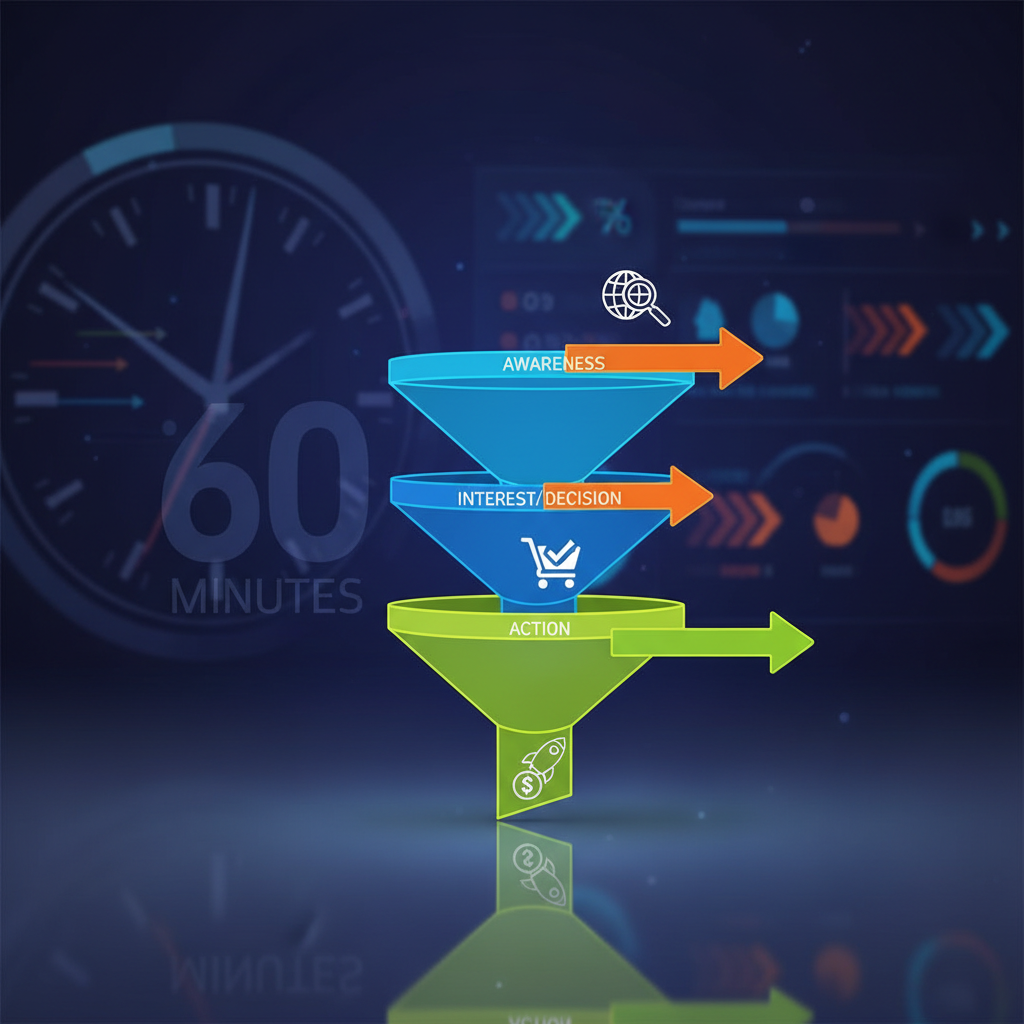
Imagine this: you're an entrepreneur on a tight schedule, juggling multiple tasks, and all you need is a simple, effective way to drive more sales. You’ve heard about funnels but think they require too much time to set up. Well, you're in luck. This guide will teach you how to quickly create a 3 step sales funnel in just 60 minutes. Yes, you read that right—60 minutes to streamline your sales process and boost your revenue.
Understanding the 3 Step Sales Funnel
Before diving into the creation process, it’s crucial to understand what a 3 step sales funnel is and why it’s vital for your business. A 3 step sales funnel typically consists of the Awareness, Consideration, and Decision stages. It's a simple yet powerful framework that guides potential customers from discovering your brand to making a purchase decision.
Think of it like a journey: at the awareness stage, you capture interest, at consideration, you nurture that interest, and finally, at the decision stage, you close the deal. A real-world example is an online store selling fitness products. Initially, they attract customers with health tips (Awareness), offer detailed product guides (Consideration), and finally, present irresistible offers (Decision). This strategic approach not only simplifies the buying process but also increases the likelihood of conversion by systematically moving prospects closer to making a purchase.
The First Step: Capturing Initial Interest
The first actionable step in creating a 3 step sales funnel is all about capturing the initial interest of your audience. This can be achieved through various methods, such as leveraging social media platforms, blogs, or even YouTube channels. One effective strategy is to publish content that resonates with your target audience's pain points. For instance, if you’re in the fitness niche, create an engaging blog post about '10 At-Home Workouts for Busy Professionals'.
Using tools like Facebook Ads can amplify your reach, targeting specific demographics interested in fitness. The key is to use a compelling call to action that encourages them to learn more—thus leading them to the next stage of the funnel, your landing page. This stage is crucial as it sets the tone for the customer journey, making it essential to deliver content that is both informative and engaging.
Building an Effective Consideration Stage
Once you have captured the interest of potential customers, the next step is to nurture that interest. This is where the consideration stage comes into play. You should focus on providing valuable information that helps your audience make informed decisions. This could be through detailed product guides, webinars, or even email series.
A practical tool you can use is an automated email marketing system, which allows you to send personalized content to prospects. For example, after a prospect signs up on your landing page, you can trigger an email sequence that provides insights into your products or services, highlights testimonials, or offers free trials. This approach not only builds trust but also keeps your brand top-of-mind as prospects evaluate their options.
For deeper insights into crafting effective email campaigns, refer to our guide on writing engaging email content. It’s essential to ensure that every piece of content you deliver during this stage aligns with the needs and desires of your audience, ultimately leading them to the final decision-making stage.
Closing the Deal: The Decision Stage
The final step in your 3 step sales funnel is all about closing the deal. This is where you convert prospects into paying customers. It involves presenting irresistible offers, such as limited-time discounts, free shipping, or bundled deals, that create a sense of urgency and encourage immediate action.
Additionally, utilizing sales pages that are optimized for conversion is critical. These pages should include strong calls to action, clear benefits, and testimonials to reinforce trust. Tools like conversion rate optimization plugins can help refine these pages, ensuring that they are as persuasive as possible.
Remember, the goal at this stage is to make the purchasing process as seamless and straightforward as possible. By reducing friction points, such as complex checkout processes or lack of payment options, you increase the likelihood of finalizing sales. It's about creating a win-win scenario where your customers feel they’re receiving tremendous value, compelling them to complete the purchase.
Common Mistakes to Avoid When Creating a Funnel
While building a sales funnel can be transformative for your business, there are common pitfalls that many entrepreneurs encounter. One major mistake is failing to understand your target audience. Without a clear understanding of who you’re serving, your entire funnel can miss the mark.
Another common error is neglecting the importance of mobile optimization. As more consumers use mobile devices for online shopping, ensuring your funnel is mobile-friendly is crucial. Slow load times and poor mobile navigation can lead to high bounce rates, costing you potential sales.
Lastly, never underestimate the power of testing. Too many funnel creators set and forget their funnels without analyzing performance metrics. Regularly reviewing data such as conversion rates, bounce rates, and customer feedback allows you to make data-driven improvements that enhance funnel performance.
Advanced Tips for Scaling Your Funnel
Once you’ve established a successful sales funnel, the next step is to scale it for even greater success. One advanced tip is to integrate retargeting strategies. By using retargeting ads, you can re-engage visitors who didn’t convert during their initial interaction, gently encouraging them back into your funnel with tailored messages.
Another powerful strategy is to incorporate upselling or cross-selling tactics. After a customer makes a purchase, suggest related products or services that complement their initial purchase. This not only increases average order value but also enhances customer satisfaction.
Finally, leveraging data analytics allows you to identify patterns and trends, enabling you to refine your strategies continuously. Tools like Google Analytics can provide valuable insights into how users interact with your funnel, offering opportunities for optimization and growth.
Related: You might also find this useful: How to Create a High-Conversion Funnel in 60 Minutes
What is a 3 step sales funnel?
A 3 step sales funnel is a streamlined process that takes potential customers from awareness to consideration and finally to decision, guiding them to make a purchase.
Why is a sales funnel important for online businesses?
A sales funnel is crucial for online businesses as it systematically converts leads into customers, optimizing marketing efforts, and increasing sales.
How can I optimize a sales funnel for mobile users?
To optimize a sales funnel for mobile users, ensure responsive design, fast loading times, and simplified navigation, enhancing the mobile user experience.
Can I use a funnel for services, not just products?
Yes, funnels can be used for services by tailoring the content and offers to showcase service benefits, build trust, and encourage conversions.